
Software / Digital systems / Integration
Software engineered around the problem.
Aurisent::CodeShop turns product ideas, operational requirements and difficult technical problems into coherent working systems - from user-facing software through to connected and hardware-adjacent behaviour.
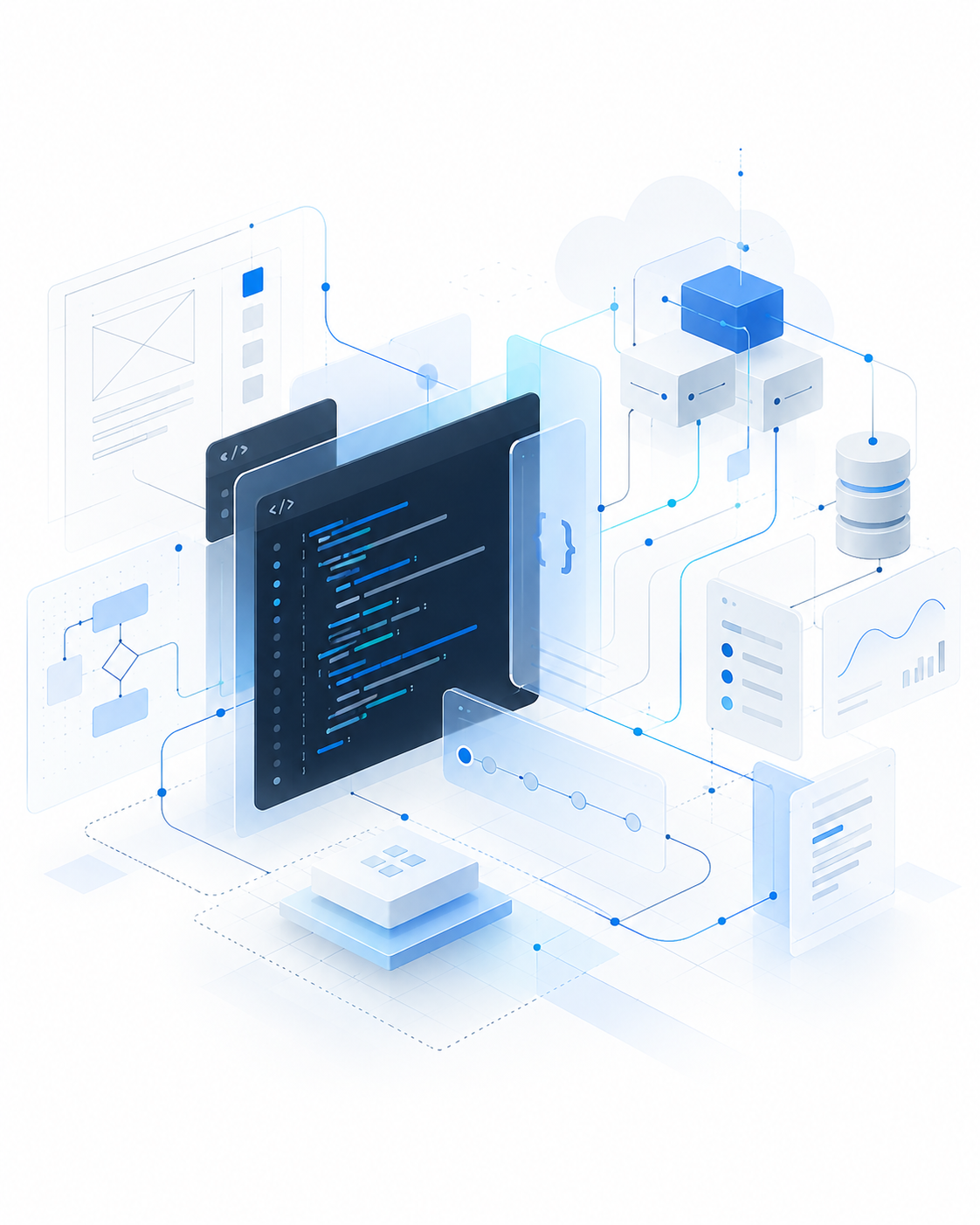
The CodeShop position
The useful part is not the code in isolation. It is the point where a requirement becomes dependable behaviour across the whole system.
What we do
Build the system the requirement actually needs.
CodeShop works across software and digital systems where architecture, interfaces, control, integration and practical delivery have to fit together. The engagement can be a complete product build or a focused technical workstream inside a wider project.
The starting point may be an idea, an existing prototype, an operational bottleneck or a technically uncertain feature. The objective is the same: reduce ambiguity, make the right engineering decisions and produce working behaviour.
Designed as a whole
A working product is a chain of decisions and interactions.
CodeShop treats the path from user or environmental input through application logic, system state and delivered action as one engineering problem. That keeps behaviour explicit, dependencies visible and integration part of the design rather than a late-stage surprise.
Approach
Develop as a system, not a relay race.
Architecture, implementation and validation overlap. Evidence from one area is allowed to change the others while the cost of change is still low.
Define the real requirement.
Users, environment, constraints, risks and success criteria.
Give the system a coherent shape.
Responsibilities, interfaces, state and technical assumptions.
Create connected working increments.
Behaviour is integrated as it is implemented, not assembled at the end.
Test the assumptions that matter.
Real behaviour, edge cases, interfaces and operating conditions.
Make the outcome usable and maintainable.
Stabilisation, deployment, documentation and handover.
Have something to build?
Tell us what the system needs to achieve.
Start with the requirement, the operating problem or the part of the idea that is technically uncertain.